
Oral and maxillofacial surgery in Umhlanga
Dr TP Chettiar treats impacted wisdom teeth, jaw joint problems, facial fractures and conditions of the mouth and jaws. Most patients come to him on referral from their dentist or orthodontist; you can also contact the rooms yourself.
- Qualifications
- BDS, FCMFOS (SA), MDent (Wits)
- In specialist practice
- Over 20 years
- Rooms
- Suite 306, Netcare uMhlanga Hospital
Which number do I call?
Use the number that matches your situation. During office hours the rooms answer all three day numbers.
Appointments and questions
Booking a consultation, fees, medical aid, moving an appointment.
031 582 5065031 582 5067
Emergencies only
A problem after surgery with Dr Chettiar that cannot wait for the rooms to open, or a facial injury.
083 491 9994Facial injury after hours
Dr Chettiar covers facial trauma and casualty emergencies at Busamed Gateway Private Hospital, 36-38 Aurora Drive, Umhlanga, which has a 24-hour emergency unit.
Directions to GatewayWhat does Dr Chettiar treat?
Maxillofacial and oral surgery covers the face, jaws, mouth and neck, and combines medicine and dentistry. These are the treatments the practice offers.
Wisdom teeth and other extractions
Removal of impacted or problem wisdom teeth and teeth that cannot be taken out simply.
Dental implants
Placing implants to replace missing teeth, planned with your dentist.
TMJ disorders and jaw surgery
Jaw joint pain, clicking and locking, and corrective surgery for jaw position.
Facial pain
Finding the source of pain in the face and jaws and treating it.
Sinus lift and bone grafting
Rebuilding bone so that implants have something solid to sit in.
Oral pathology
Diagnosing and treating lumps, ulcers, patches and cysts of the mouth and jaws.
Facial fractures
Treatment of broken jaws, cheekbones and other facial bones after injury.
Referred by your dentist? Here is what happens next
Your dentist or orthodontist sends a letter and X-rays. From there, this is the usual path.
Contact the rooms
Call 031 582 5065 or send the appointment request below. Say if you have pain or swelling so the rooms can see you sooner.
Consultation
Dr Chettiar examines you, looks at your X-rays or takes new images, and explains what he recommends and why.
Quote and medical aid
You receive a written quote with procedure codes. For hospital or day-clinic surgery you get pre-authorisation from your medical aid.
Surgery and recovery
Surgery in the rooms, at KZN Day Clinic or at Netcare uMhlanga Hospital, with written aftercare instructions to take home.
How does recovery from wisdom teeth removal usually go?
Choose a stage to see what is normal, what to do and when to call. Keep this page open on your phone after surgery.
A typical pattern, not a prediction. Everyone heals differently, and your own instructions from Dr Chettiar come first.
Day of surgery
The first evening
- What is normal
- Numbness from the local anaesthetic for a few hours.
- Some oozing of blood and pink-stained saliva into the evening.
- Swelling starting to build.
- What to do
- Bite firmly on the gauze for 30 to 45 minutes; replace it if the bleeding continues.
- Hold a cold pack against the cheek, 20 minutes on and 20 minutes off.
- Take the pain medication you were given before the numbness wears off.
- Eat soft, cool food and rest with your head raised.
- Do not rinse, spit, use a straw, smoke or drink hot drinks today.
Call the rooms on 031 582 5065, or 083 491 9994 after hours, if you have: Bleeding that keeps soaking the gauze after 30 to 45 minutes of firm biting pressure.
Days 1 to 2
Swelling builds
- What is normal
- Swelling increases and is usually at its most on day two or three.
- Stiffness when opening your mouth, and possibly bruising on the cheeks or neck.
- Discomfort that is controlled by your medication.
- What to do
- Start gentle warm salt-water rinses after meals from the day after surgery: half a teaspoon of salt in a glass of warm water.
- Brush your other teeth gently and keep up fluids.
- Keep to soft food and take medication exactly as directed.
- Keep avoiding smoking and straws so the blood clot stays in place.
Call the rooms on 031 582 5065, or 083 491 9994 after hours, if you have: A fever, or swelling that makes it hard to swallow or breathe. Difficulty breathing needs the nearest 24-hour emergency unit straight away.
Days 3 to 4
Turning the corner
- What is normal
- Swelling starts to go down and jaw stiffness eases.
- Feeling tired is common.
- What to do
- Carry on with salt-water rinses after every meal.
- Open and close your mouth gently through the day to loosen the jaw.
- Watch for dry socket: pain that gets worse instead of better around day three to five, often with a bad taste or smell.
Call the rooms on 031 582 5065, or 083 491 9994 after hours, if you have: Pain that is getting worse rather than better, pus, or swelling that starts increasing again.
Days 5 to 7
Back to routine
- What is normal
- Most people are back at work or study within three to seven days.
- Dissolving stitches start to loosen and fall out.
- What to do
- Return to your normal diet gradually.
- Keep hard, sharp food such as chips and nuts away from the healing sockets.
- Keep rinsing after meals.
Call the rooms on 031 582 5065, or 083 491 9994 after hours, if you have: Numbness of the lip, chin or tongue that is still there, or a bad taste that will not go away.
Week 2
Healing continues
- What is normal
- The sockets keep closing over the coming weeks.
- Mouth opening is back to normal for most people.
- Food can collect in the sockets while they close.
- What to do
- Keep rinsing after meals until the sockets have closed.
- Attend your review visit if one was booked for you.
Call the rooms on 031 582 5065, or 083 491 9994 after hours, if you have: Any area that is not healing, or anything that worries you.
Who is Dr TP Chettiar?
- DegreeBDS
- Specialist fellowshipFCMFOS (SA), College of Maxillofacial and Oral Surgeons of South Africa
- Master's degreeMDent, University of the Witwatersrand
- PracticeFull-time specialist practice for over 20 years
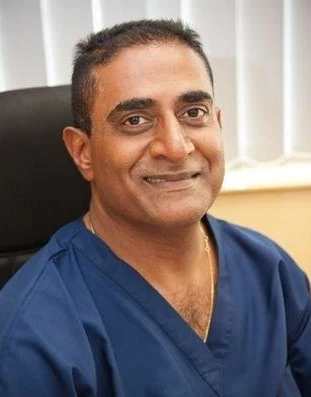
Dr Thoganthiren Perumal (Thogan) Chettiar is a maxillofacial and oral surgeon in full-time specialist practice in Umhlanga.
He treats conditions of the head, face, jaws and mouth: from impacted wisdom teeth and dental implants to jaw joint disorders, disease of the mouth and broken facial bones. Elective patients are seen at his rooms at Netcare uMhlanga Hospital, and he covers inpatient facial trauma and casualty emergencies at Busamed Gateway Private Hospital.
Many of his patients are referred by dentists and orthodontists across KwaZulu-Natal. If you have been referred, bring your referral letter and any X-rays to the first consultation.
Netcare uMhlanga Hospital
Consulting rooms in Suite 306 of the medical centre. Surgery under general anaesthetic takes place in the hospital's theatres.
319 Umhlanga Rocks Drive
KZN Day Clinic
Day-surgery facility where Dr Chettiar is a listed maxillofacial and oral surgeon.
2nd Floor, Ingenuity House, 325 Umhlanga Rocks Drive
Busamed Gateway Private Hospital
Dr Chettiar covers inpatient facial trauma and casualty emergencies here. Elective patients are seen at the rooms.
36-38 Aurora Drive, Umhlanga
How do I request an appointment?
Send your details and the rooms will contact you to arrange a time. For anything urgent, phone instead.